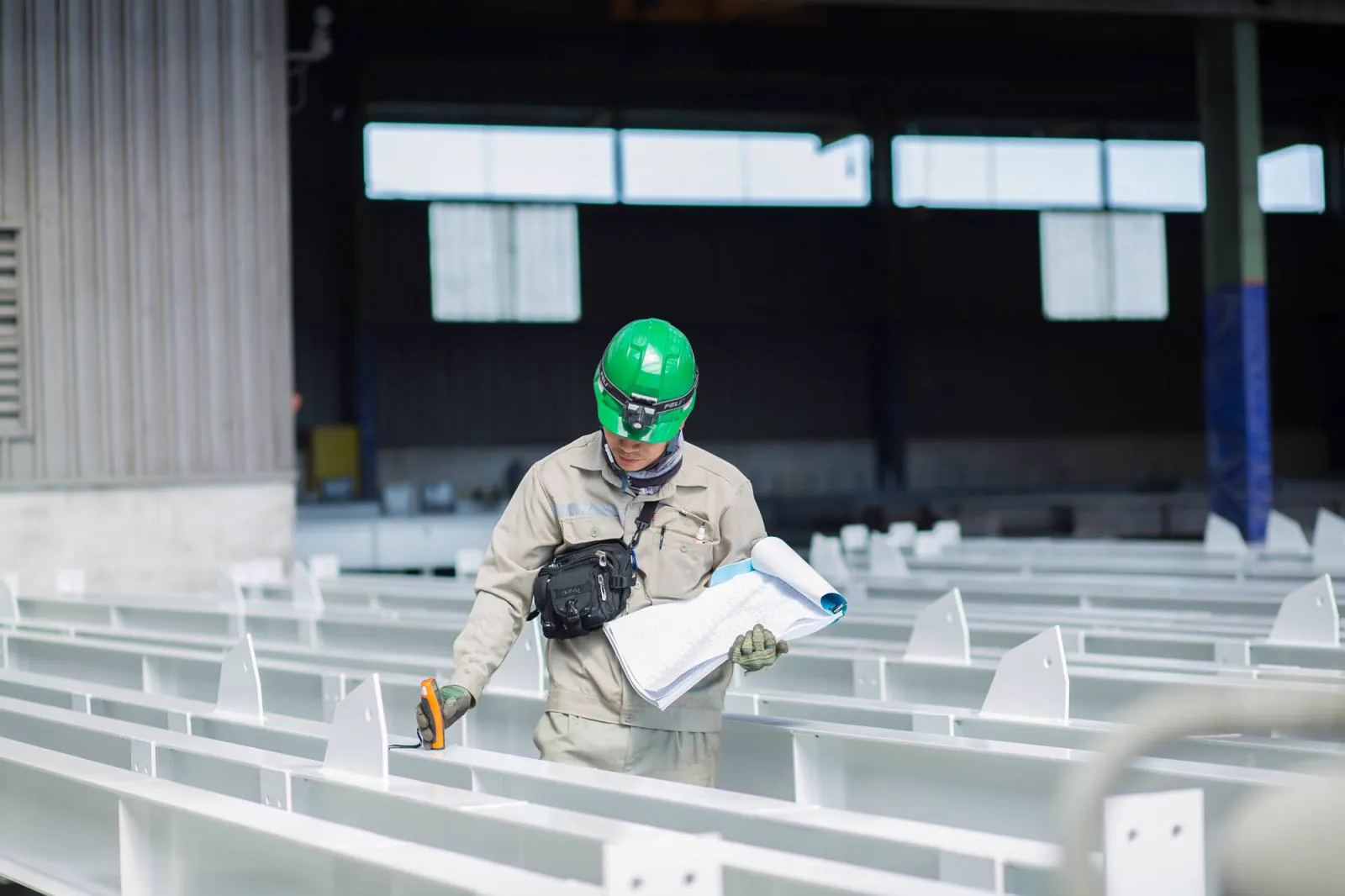
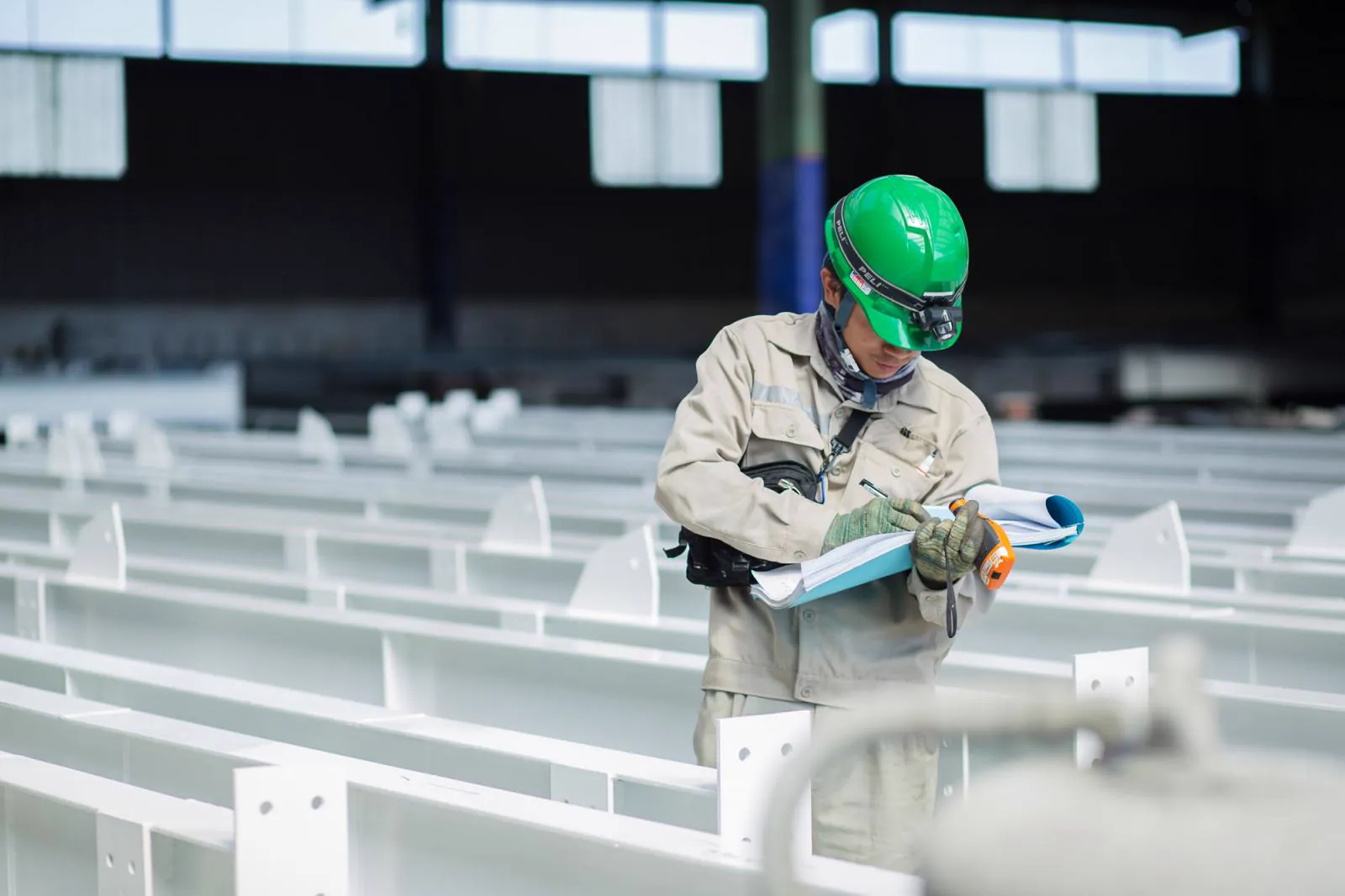
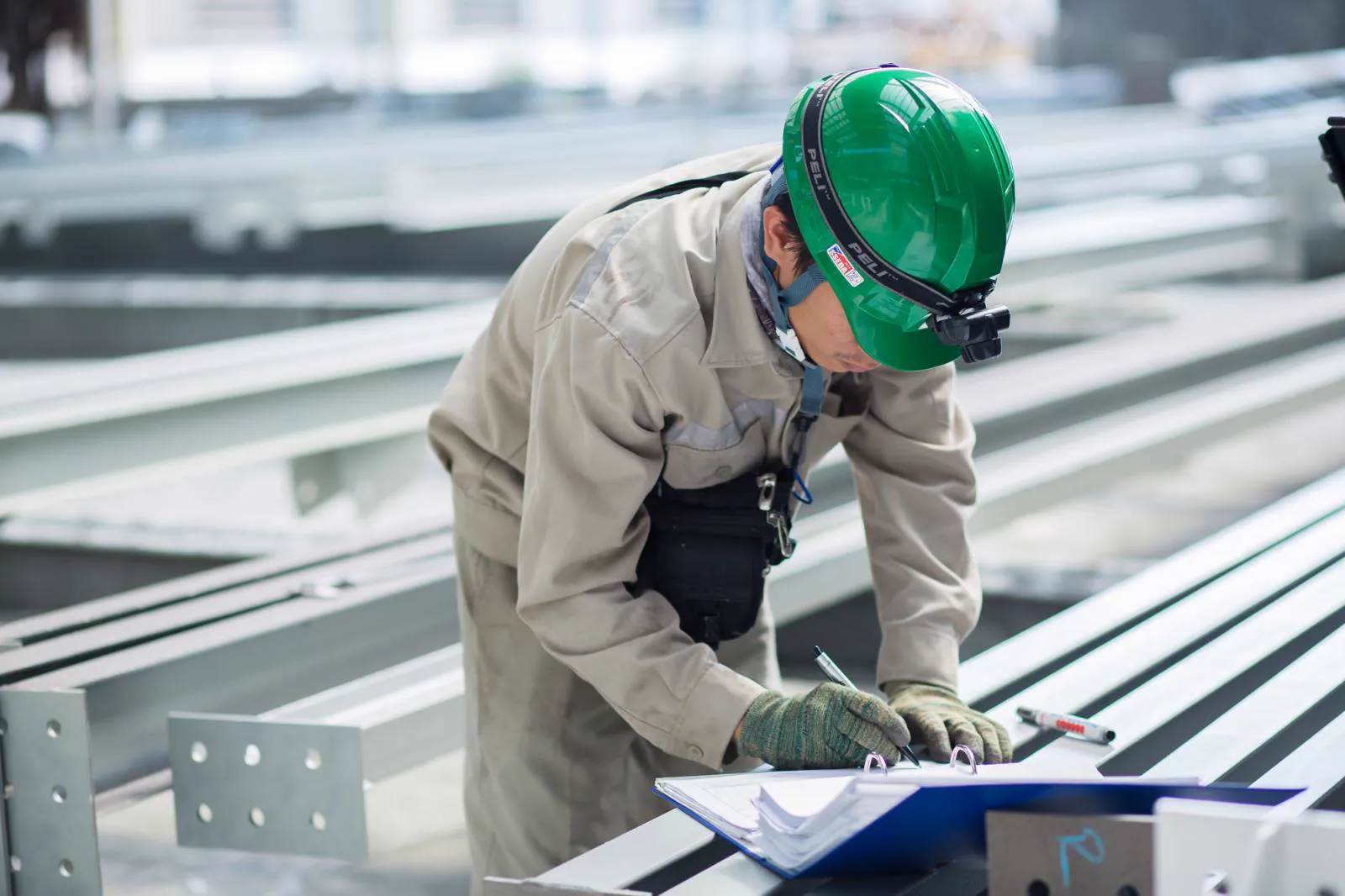
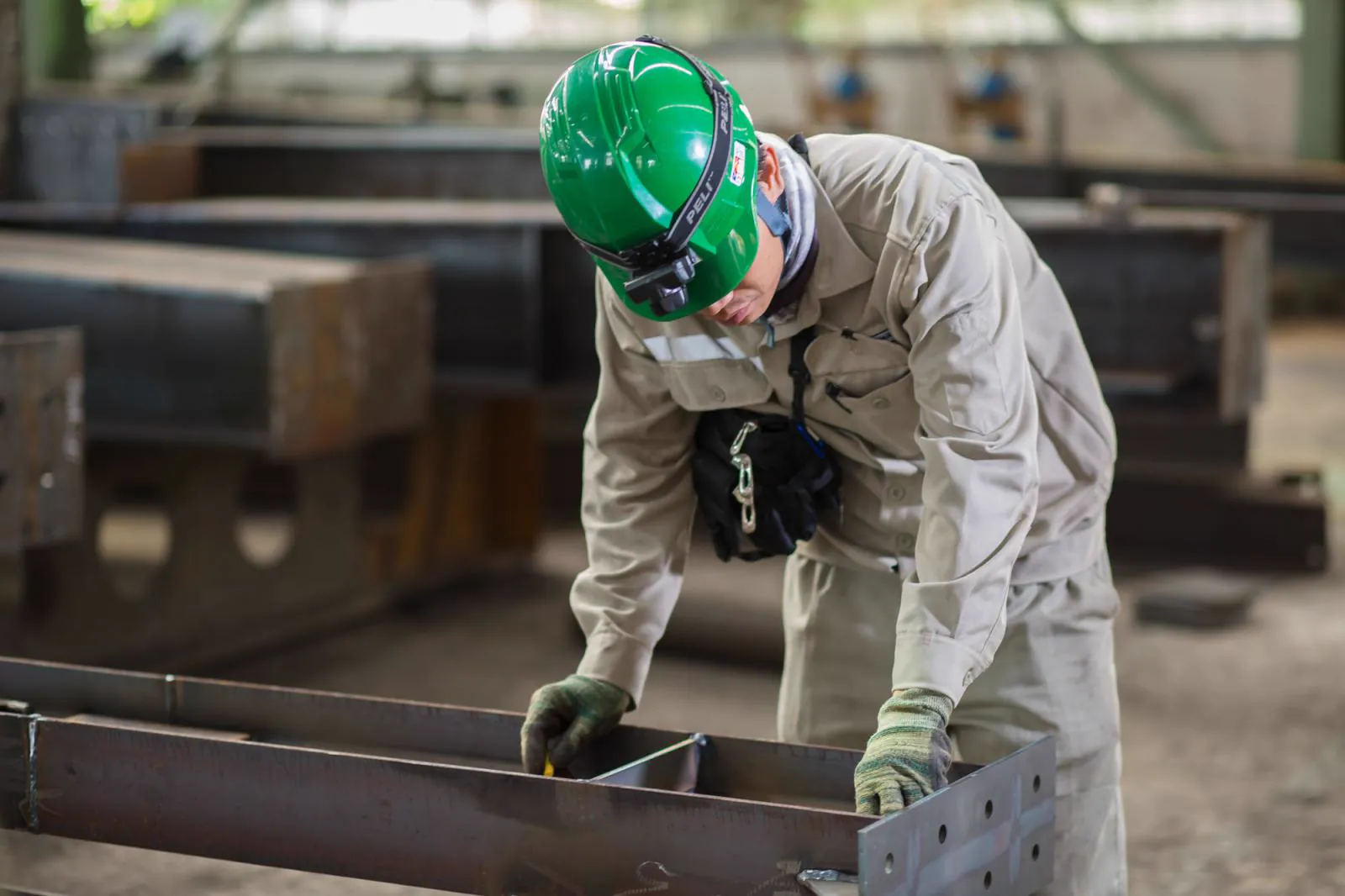
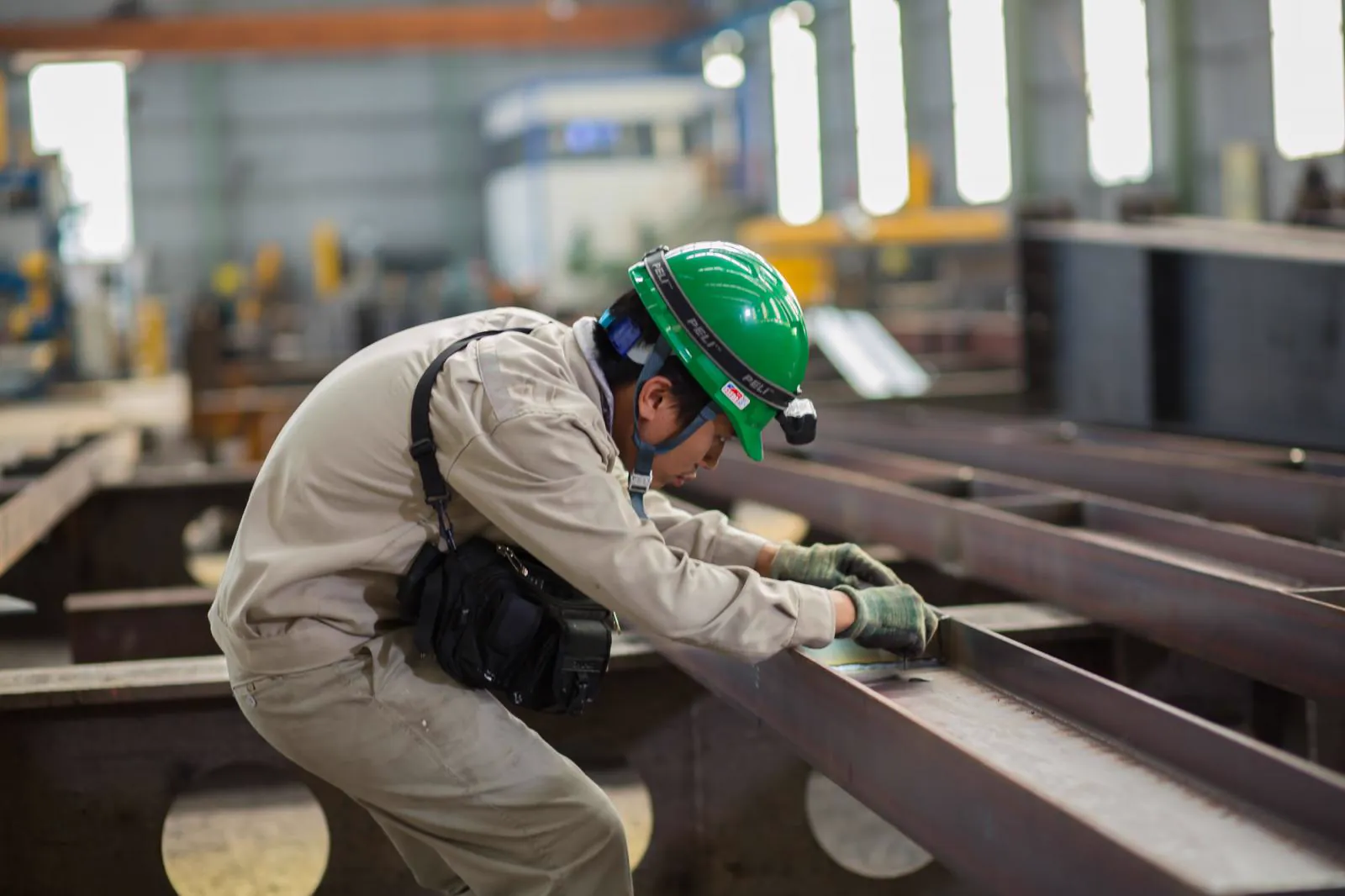
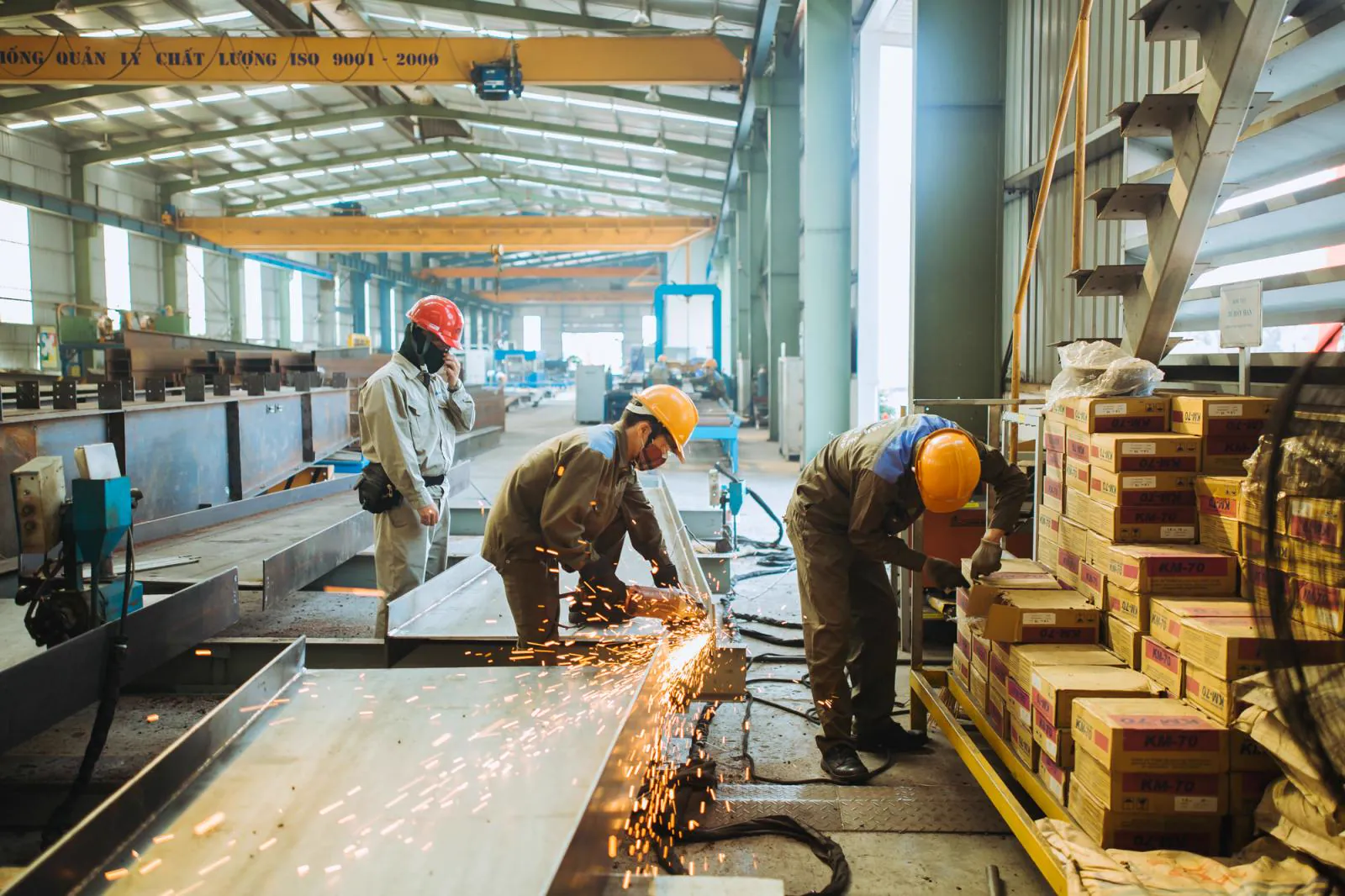
Every PEB Philippines building is fabricated at SEICO Group's factories in Hai Phong, Vietnam, then shipped to the Philippines, where our local team handles importation and delivery to site.
Factory production is crucial, because the accuracy and quality of the members and the completion of a pre-engineered steel building depend entirely on it. That is why fabrication is controlled by QA/QC engineers at every stage.
1. Incoming material inspection
All main materials used to fabricate steel members are inspected through the following steps:
- Check CO and CQ quality documents
- Check against project requirements
- Check against current standards
- Cut samples for testing
- Test at a third-party laboratory, which may be designated
- Receive test results
- Put into operation
2. Steel cutting and slitting
Steel members come in two basic forms: rolled (or cast) sections and built-up sections. Rolled sections already have their shape when they leave the steel mill, so cutting simply removes excess to match the design. Built-up sections usually start as coils or plates, which are cut into the required shapes according to the drawings and then assembled to form the member.
With major investment in highly automated equipment, SEICO Group's factories use many cutting technologies:
- Automatic laser cutting
- Automatic plasma and oxy cutting
- Automatic cutting with slitting machine
- Automatic cutting with press brake
- Automatic cutting with circular saw
- Automatic cutting with band saw
- Semi-automatic cutting with oxy marking machine
3. Fit-up assembly
Following the design, the flanges and webs of the members are positioned accurately after cutting and tack-welded together.
4. Assembly welding
After accurate fit-up, members go into the automatic welding machine. Welds are visually inspected and checked by ultrasonic or magnetic particle testing. Only welds that meet both appearance and quality requirements are approved.
5. Straightening
The heat of welding can distort members. To ensure accurate erection, members must be aligned, straightened and carefully checked before moving to the next step.
6. Welding of plates and stiffeners
After the members are welded and aligned, stiffeners and plates are hand-welded by highly skilled welders to ensure accuracy. All of the welders at the factory hold welding certificates that meet the strictest requirements.
7. Surface cleaning and shot blasting
After fabrication, members are moved to the cleaning area, where they are derusted and shot blasted before painting, the final finishing step.
8. Painting
The durability of steel members during construction and use depends heavily on the paint coating that protects them from the environment. Members receive one coat of anti-rust primer and two coats of finish paint in the color the client requires. See Industrial paint.
In the factory